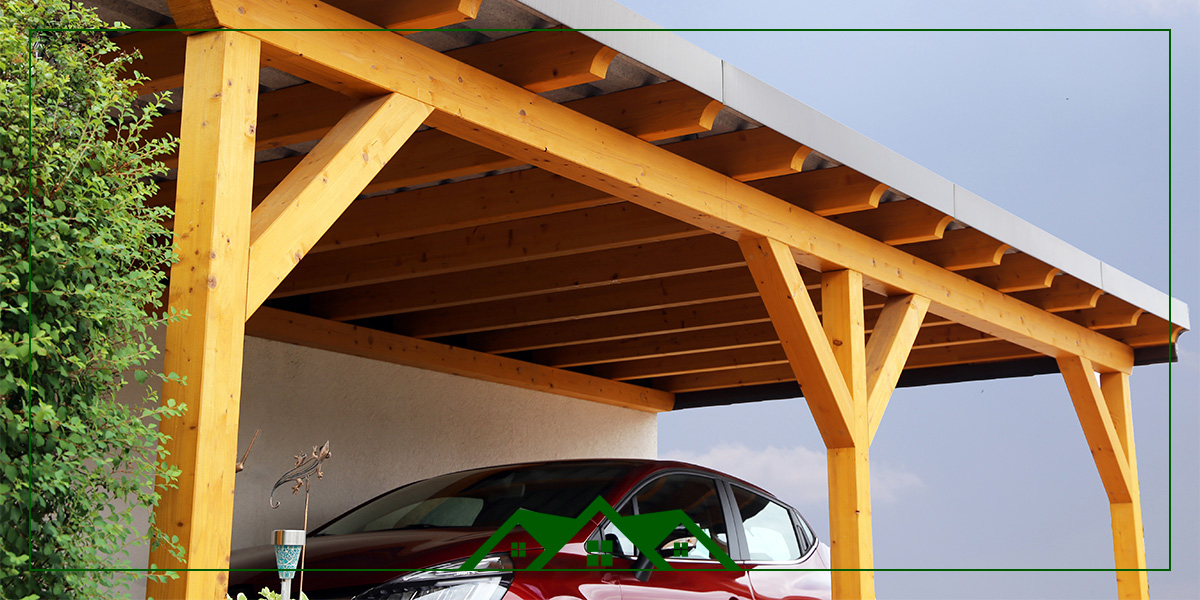
Carports are versatile structures despite their limited functionality. They serve a distinct purpose — to protect your vehicle from exposure to the elements. While they don’t offer full protection, they help reduce the sun and rain’s effects and protect your vehicle from falling debris.
You might be considering expanding on your existing carport to increase the cover since you have the framework for it. A carport conversion to garage project is enticing because you already have a foundation to work with. However, converting carport to garage spaces involves several important considerations before you begin. We’ll discuss these requirements, along with step-by-step instructions for how to turn a carport into a garage that adds value and functionality to your home.
What to Consider Before Turning Your Carport into a Garage: Carport Conversion Planning
Converting a carport into a garage will cost less than building a garage from scratch, but there are things to contemplate beforehand. Check the following requirements:
Local Building Codes and Regulations Compliance
Many home improvement projects require a permit to commence. This is to ensure the project meets the local building codes for safety and homeowners association (HOA) requirements. If you belong to an HOA, they’ll inform you of specific regulations for building structures in the neighborhood. Your local municipality will also advise of any guidelines for structural additions, like including fire-rated walls and entry doors.
Cost of Converting
A carport conversion to garage might seem like a quick job, but the costs can add up quickly. Converting carport to garage space typically costs less than building a new garage from scratch, but you’ll still need to budget for several components. Consider the cost of the following at a minimum:
Framing lumber and siding
Doors and windows
An opener system
Insulation
Flooring
Electrical service
Permit fees
Professional consultation or installation
A complete professional garage installation can set you back thousands for everything from start to finish.
Assess the Carport’s Structural Integrity
An existing carport structure that’s stable and sturdy is easier to convert than a flimsy one. For example, weak posts that can hardly support the roof may take more to convert the entire carport into a garage. Checking the carport’s condition will help determine the required material and labor before commencing the job.
Check All the Carport Measurements and Components
A standard or double garage has distinct requirements regarding sizes and dimensions. The garage requires a depth of 20 feet and an opening of just over 8 feet. The slab flooring should be wide enough to accommodate one or two cars, measuring up to 14 feet in width. The concrete must be in good condition, cover the right surface area and support the prospective garage walls and beam weight.
Assess the roofline’s condition and fit to see if it needs to be changed to suit the garage door you’re installing.
Step-by-Step Guide: Converting Carport to Garage
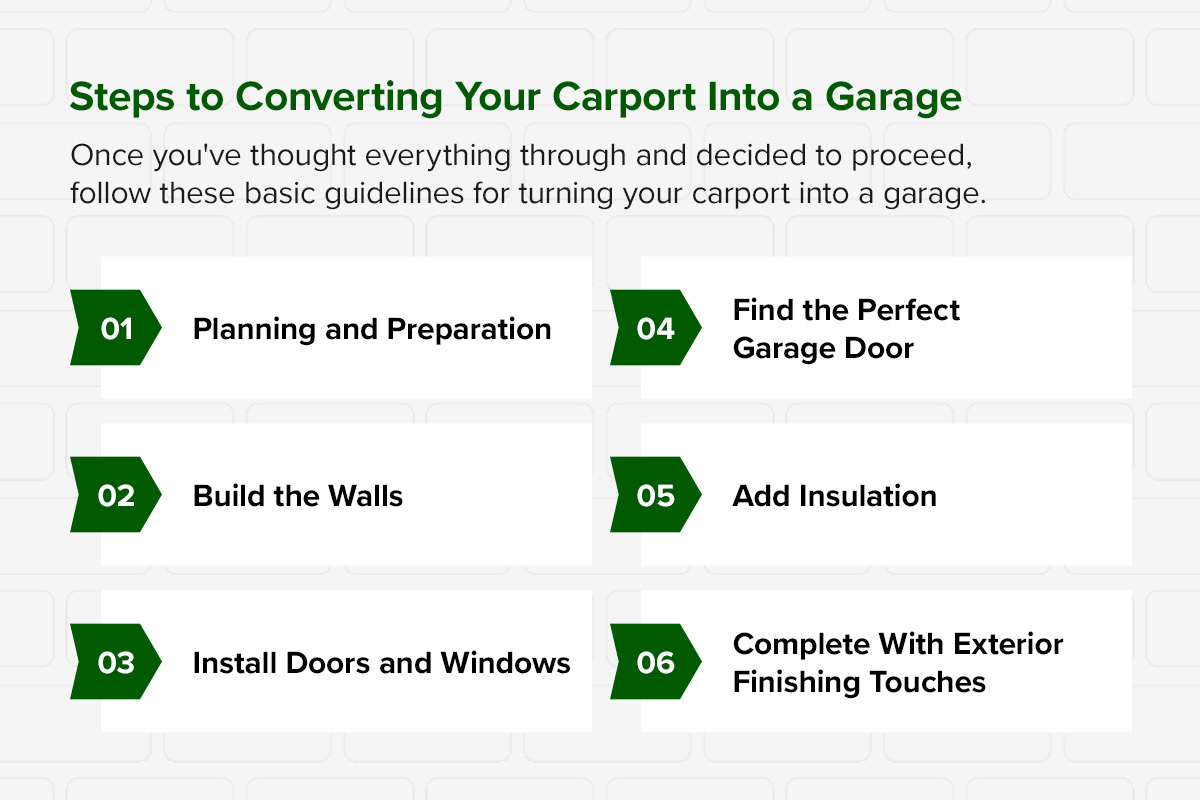
Ready to begin your carport conversion to garage project? Once you’ve planned everything through and obtained the necessary permits, follow these essential steps for turning your carport into a garage. This carport to garage conversion process typically takes several weeks, depending on your DIY skills and whether you hire professionals.
1. Planning and Preparation
Start by drawing up the required plans for your new garage and add them to the blueprint of your existing carport. Review the proximity to any neighbors and other boundaries to ensure you are compliant. If your project requires digging, be sure to contact the appropriate utility companies to mark where your utility lines are.
Inspect the ground’s condition and ensure it’s sound enough to support an efficient drainage system. Remember the costs and building regulations involved when planning a conversion project like this.
2. Build the Walls
The main distinction between a garage and a carport is that a garage is fully enclosed. When converting carport to garage, the first major step is building wall frames to fully enclose and secure the structure. This is the most transformative part of turning a carport into a garage. The wall frames generally must be spaced within 16 inches from the center and be strong enough to support the rest of the framework.
It’s important to have a solid bottom plate for added stability. The pressure-treated wood plate must be damp-proof to repel ground moisture. Tie the wall frames to the top and sides of the carport to keep it in place.
3. Install Doors and Windows
If you intend to have window and door access, plan for these openings to be included. A window isn’t essential, but you’ll need a garage door. When converting an attached carport to a garage, you may also need an entry door to your home, though this is not always required. If you install a door, ensure you meet the building and safety requirements for compliance purposes.
4. Find the Perfect Garage Door
Once you’ve constructed the foundation and erected solid walls, the fun part comes in. Spend time reviewing reputable garage door installation companies for the best in quality doors and outstanding service. If you’re working with a contractor, have them help you choose the perfect garage door style to suit your family and structure’s needs.
Here are a few factors to consider:
Choose the right garage door style for your home. Roll-up, carriage, tilt-up, sliding and side-hinged are various options you can choose from.
Glass or aluminum panels provide a unique look that will make your garage stand out. You should ensure it fits in with your home’s exterior to avoid it looking out of place.
The right garage door color can make or break the aesthetic appeal. Bold, bright, contrasting colors speak volumes, while subtle, neutral colors blend beautifully with the surroundings.
Garage doors are available in wood, steel, metal, aluminum and fiberglass. Choosing the appropriate material is important as you want the most value for money.
Additional features like windows and other embellishments are optional, but they enhance your door’s curb appeal.
Apart from how the door looks, it should be functional and serve its purpose. This includes:
Increased security: A durable garage door must be strong enough to withstand storms and other impacts. It should also provide security against intruders.
Reduced energy bills: An insulated garage door helps regulate your home’s internal temperature, especially in the adjacent rooms. Insulation means the HVAC doesn’t work as hard to cool or warm the space, so you spend less on energy bills.
Minimal maintenance: A newly installed garage door requires little to no maintenance. You’ll enjoy the numerous benefits that come with having a worry-free garage door.
Smoother operation: With a new garage door, you experience less noise during operation, and it opens and closes seamlessly.
Choosing a suitable garage door opener is essential as it enhances the door’s performance. There are some benefits that come with installing them, depending on the model:
The ability to connect to the Wi-Fi for remote access
Compatibility with sensors and rolling codes to increase security and reduce injury
Additional lighting
Automatic opening and closing features
A professional garage door installation from a dealer like Cornwell Door Service is the best option to ensure safety, compliance and a speedy process.
5. Add Insulation
The more areas you insulate in your garage, the more the room will retain heat and cold and regulate the overall temperature. You can invest in an insulated garage door from the beginning or have an existing garage door insulated once it’s installed. You should also consider insulating the walls, ceiling and any attic space. Add weatherstripping around any windows and entry doors.
6. Complete With Exterior Finishing Touches
You have free reign where the finishing is concerned. Try to match your garage door with your home’s exterior by using contrasting or complementary colors and accents. Any embellishments should highlight your garage and home, not detract or be distracting.
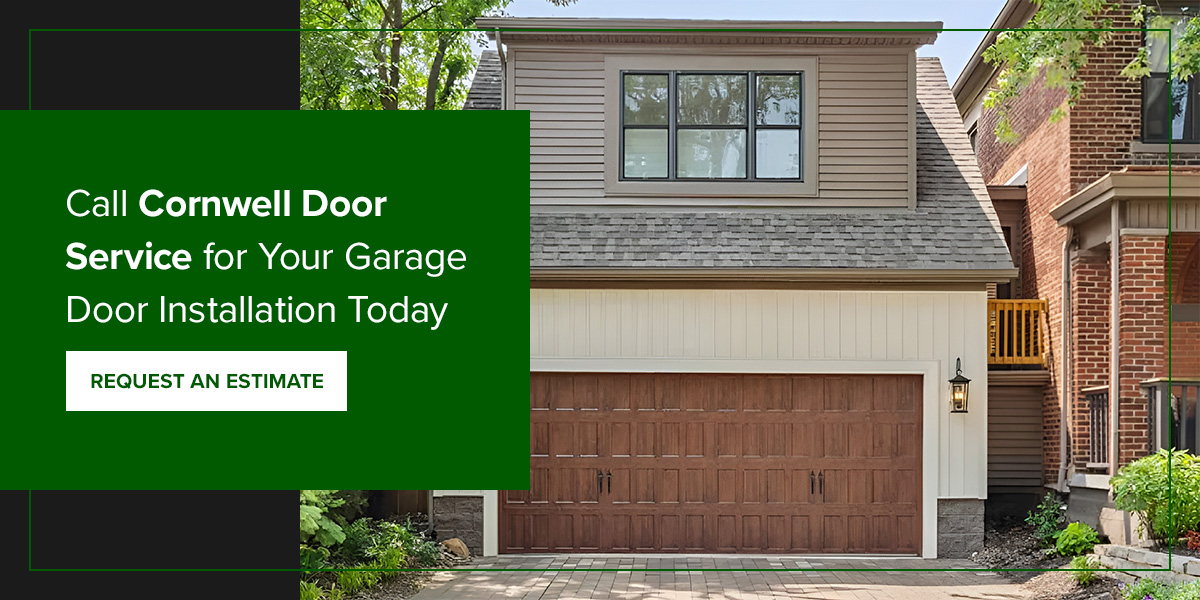
Call Cornwell Door Service for Your Garage Door Installation Today
At Cornwell Door, we want you to be confident and proud of the door you choose for your new garage. Our high standards and integrity ensure you get a top-quality garage door in the style that best fits your home and budget while our professionals take care of the installation.
Completing a carport conversion to garage project is a significant home improvement that adds value, security, and functionality to your property. Whether you’re converting carport to garage space on your own or working with professionals, choosing the right garage door is one of the most important decisions. At Cornwell Door Service, we’ve helped countless Central Pennsylvania homeowners complete their carport to garage conversion with beautiful, durable garage doors.
If you live in Central Pennsylvania and you’re ready to install your new garage door, call us at (800) 820-9841 or request an online estimate to schedule a service date!
Carport Conversion to Garage: Frequently Asked Questions
How much does a carport conversion to a garage cost?
Converting carport to garage typically costs between $8,000 and $24,000, depending on size, materials, and whether you hire professionals. This is significantly less expensive than building a new garage from scratch, which can cost $30,000-$60,000. The main costs when turning a carport into a garage include framing and siding ($2,000-$5,000), a quality garage door and opener ($1,500-$4,000), insulation ($1,000-$2,500), electrical work ($1,000-$3,000), and permits ($200-$1,000).
Do I need a permit for a carport conversion to a garage?
Yes, most municipalities require building permits when converting carport to garage space. Permits ensure your carport to garage conversion meets local building codes, fire safety requirements, and zoning regulations. Check with your local building department before starting work. Your homeowners association (HOA) may also have specific requirements or restrictions on turning a carport into a garage.
How long does converting a carport to a garage take?
A typical carport conversion to garage project takes 2-6 weeks for professionals, or 4-12 weeks for DIY work depending on skill level and available time. Converting carport to garage involves multiple phases: planning and permits (1-2 weeks), building walls and framing (3-5 days), installing doors and windows (2-3 days), electrical and insulation work (2-4 days), and finishing touches (3-7 days). Weather can also impact your timeline when turning a carport into a garage.
Does converting a carport to a garage add value to my home?
Yes, carport conversion to garage typically adds significant value to your home. A well-executed carport to garage conversion can increase home value by $10,000-$20,000 or more, often exceeding the project cost. Garages are highly desirable features for homebuyers, offering better security, weather protection, and storage than carports. Converting carport to garage space also improves curb appeal and functionality.
Can I do a carport conversion to a garage myself?
While some homeowners successfully complete DIY carport to garage conversion projects, it requires intermediate to advanced construction skills. Converting carport to garage involves framing, electrical work, potentially plumbing, and garage door installation—each requiring specific expertise. Unless you’re experienced with construction projects, hiring professionals ensures your carport conversion to garage meets building codes, operates safely, and is completed efficiently.