Spring has arrived in Pennsylvania, bringing the annual urge to refresh your home. You’re ready to tackle yard work, clean gutters and check your HVAC system. But there’s one critical home maintenance task that often gets overlooked: your garage door.
Your garage door is your home’s largest moving appliance, and it just endured months of harsh winter conditions. Ice buildup, road salt and freezing temperatures took their toll on springs, cables and rollers. Winter weather causes wear and tear that’s worth addressing to keep your door running smoothly and safely.
A thorough inspection helps you catch small issues early and keep your garage door performing reliably all year. Use this checklist to learn how to maintain your garage door after winter’s wear and tear, help you spot areas that need attention and determine when to call an expert.
Why Your Garage Door Needs a Post-Winter Checkup
Winter is tough on garage doors. Between December and March, your door faces environmental stressors that can affect its performance and longevity.
Road salt contributes to corrosion on metal components like springs, hinges and tracks. Freeze-thaw cycles weaken metal parts through repeated expansion and contraction. Moisture can work into seals and weatherstripping, which may lead to rust. Debris accumulates in tracks, making rollers work harder with every cycle.
A spring checkup is a smart preventive measure that delivers three major benefits for garage door upkeep:
Extend its lifespan: Addressing corrosion and wear early helps you avoid premature replacement of expensive components.
Spot potential issues early: A visual inspection reveals areas that need attention before they affect daily operation.
Prevent functionality issues: Proper seasonal garage door maintenance keeps your door operating smoothly and quietly.
The ideal timing for your spring garage door maintenance is within 30 days of warmer weather arriving. This window allows you to address winter-related damage before increased spring and summer activity places additional strain on your system.
Why the 30-day window matters: Winter damage compounds over time. A small rust spot can spread. A slightly worn cable can fray further. A minor spring weakness can escalate. Addressing issues within 30 days prevents small problems from becoming expensive repairs.
Mark your calendar for mid-March to early April to schedule your comprehensive spring inspection. This timing gives you the full benefit of preventive maintenance before garage door use increases with warmer weather.
The Ultimate Spring Garage Door Maintenance Checklist
A comprehensive checklist is a key part of a responsible homeowner’s seasonal upkeep routine. Just like your roof or HVAC system, your garage door benefits from seasonal attention.
Maintaining your garage door starts with knowing what to inspect and when to take action. Regular maintenance keeps your system reliable year-round.
1. Start With a Thorough Visual Inspection
Start your garage door spring maintenance by examining all critical components for signs of wear. A careful visual inspection helps you identify problems before they escalate:
What to Check When Inspecting Garage Door Springs
When inspecting garage door springs, check for these critical signs of wear:
Gaps in coils (indicates signs of breakage)
Rust or corrosion on the metal surface
Visible stretching or sagging of the spring
Spring mounting brackets are secure and properly fastened
Important: If you spot any of these issues, call a professional immediately. Spring repair requires specialized knowledge and tools for safety.
Cables: Check for fraying, kinks or broken strands.
Rollers: Inspect for cracks, worn edges or wobbling during operation.
Tracks: Look for dents, misalignment or debris buildup.
Hardware: Check that all bolts and brackets are tight and secure.
Safety Features Testing
Your garage door includes several critical safety mechanisms that protect you and your family. Spring maintenance is the perfect time to verify these systems are functioning properly.
Auto-Reverse Mechanism Test
The auto-reverse safety feature stops and reverses your door if it encounters an obstruction while closing. This prevents entrapment injuries and property damage.
Open the garage door fully using the opener
Place a 2×4 block of wood on the floor directly in the door’s path
Close the door using the opener remote or button
The door should stop immediately when it contacts the wood and reverse back up
If the door doesn’t reverse, contact a professional immediately
Photo Eye (Sensor) Test
Photo eye sensors create an invisible beam across the bottom of your door opening. If anything breaks this beam while the door is closing, it stops the door to prevent accidents.
Open the door fully
With the door closing, wave your hand in front of the photo eye sensor (usually 6 inches above the floor)
The door should stop immediately when you break the beam
If the door doesn’t respond, the sensor lens may need cleaning or the sensor may need professional service
These safety tests should be performed at least twice yearly, particularly at the beginning of spring. They’re simple to do but absolutely critical for preventing accidents.
When to Call a Professional Technician
While many maintenance tasks are homeowner-friendly, certain situations require professional expertise and specialized tools. Don’t hesitate to call if you spot any of these issues:
Springs showing gaps in coils or visible stretching (indicates breakage)
Frayed or broken cables
Excessive rust on metal components
Door moving unevenly or dragging to one side
Loud grinding, squealing, or popping noises
Safety reversing mechanism not functioning
Springs pulling away from mounting brackets
Any damage from winter storms or accidents
Important: Spring and cable replacement should never be DIY projects. These components are under extreme tension and can cause serious injury if mishandled. Professional technicians have the proper equipment and safety training to perform these critical repairs safely.
The Cost of Skipping Spring Maintenance
Deferred maintenance on garage doors leads to compounding problems and significantly higher repair costs. What starts as minor wear becomes major structural damage when ignored.
Common Expensive Repairs Resulting From Skipped Maintenance
Spring replacement: $300-$600 per spring (most systems have 2 springs, so $600-$1,200 total)
Cable and pulley replacement: $200-$400
Panel replacement: $500-$1,500+ (from unbalanced door operation causing damage)
Motor/opener replacement: $800-$2,000 (from overwork due to worn parts)
Emergency service calls: Often charged at 25-50% premium over regular pricing
Full door replacement: $2,500-$5,000+ (when damage is extensive)
The Math On Preventive Maintenance
A single annual maintenance visit costs $150-$300. A single major repair from deferred maintenance costs $500-$2,000+. The ROI is obvious: annual preventive maintenance saves thousands.
Consider this scenario: A homeowner skips maintenance for 3 years to save $450-$900 in annual visits. When springs finally fail, they pay $1,200 for emergency replacement plus potential additional damage. They would have saved $300-$600 by doing annual maintenance.
Regular spring and component maintenance is one of the highest-ROI home maintenance investments you can make. A small annual investment prevents major expenses down the road.
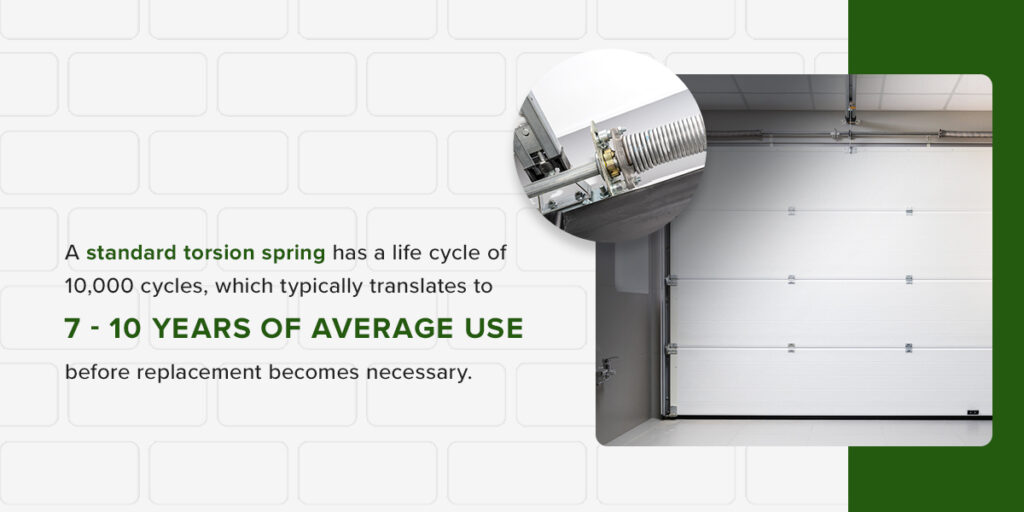
Spring fatigue is a common wear pattern for garage doors. A standard torsion spring has a life cycle of 10,000 cycles, which typically translates to seven to 10 years of average use before replacement becomes necessary. Regular garage door spring maintenance helps you catch wear before it leads to failure.
2. Clean the Door, Tracks and Sensors
Cleaning removes corrosive salt, grime and debris that accumulated over winter. You’ll need mild dish soap, water, a soft cloth and a soft-bristle brush.
Start with a gentle hose rinse from top to bottom. Avoid high-pressure washers, bleach or abrasive cleaners, as they can damage the finish, seals or paint. Wash the panels with soapy water, then rinse thoroughly to remove soap residue.
Once the door panels are clean, focus on the tracks, rollers and sensors:
Tracks: Remove visible debris with your hands or a brush. Wipe down surfaces with a damp cloth to eliminate salt residue.
Rollers: Clean the rollers by rotating them and wiping away buildup that can cause friction and noise.
Sensors: Wipe the lenses with a soft cloth to remove dust and dirt. Remove any obstructions from the sensor path and check that both sensors are aligned properly.
Apply silicone-based or lithium spray lubricant to hinges, rollers, springs, and bearings. Do not lubricate tracks (causes slipping). Wipe away excess.
Select silicone spray or white lithium lubricant
Apply to moving parts: hinges, rollers, springs, and bearings
Skip the tracks entirely (causes slipping and dirt accumulation)
Test the auto-reverse mechanism by placing a two-by-four or similar object in the door’s path, then close the door using the opener. When the door contacts the object, it should immediately reverse direction. If it hesitates or doesn’t reverse, the force settings need professional adjustment.
Next, test the photo-eye sensors. Open the door fully, then press the close button. While the door is descending, wave an object through the sensor beam near the floor. The door should reverse immediately when the beam is interrupted.
If either safety feature fails these tests, your door needs attention right away. It may be a good opportunity to upgrade to a modern garage door opener with enhanced safety technology. When choosing an opener, look for features like battery backup and smartphone connectivity. Proper sensor alignment is essential for reliable safety feature performance.
When to Call a Professional
While DIY inspections are valuable for garage door upkeep, knowing your limits is essential for safety. Some maintenance tasks are straightforward, while others require specialized training and equipment.
Understanding the difference helps you protect your family and keep your door system in excellent working order.
DIY-Friendly Maintenance Tasks
These basic maintenance activities are safe for most homeowners to handle on their own:
Cleaning door panels, tracks and sensors
Lubricating hinges, rollers and springs
Testing auto-reverse and photo-eye safety features
Visual inspections for rust, wear and damage
If you need replacement parts like weather seals or new rollers, Cornwell Door can help.
Warning Signs That Require a Professional Technician
Some issues require immediate professional attention.
Call a professional if you notice these signs:
Broken spring: A visible gap in the spring coils means the spring has snapped and needs replacement.
Frayed cables: Cables under tension should be handled only by trained technicians.
Failed balance test: An unbalanced door indicates spring issues that require expert adjustment.
Failed auto-reverse test: Safety features that don’t work properly need immediate professional attention.
Garage doors are heavy systems with high-tension components. Hiring professionals for annual garage door maintenance helps ensure your system receives proper servicing from trained technicians and helps you prevent bigger problems.
If you have additional questions about servicing garage doors, our FAQ section covers many common concerns homeowners face.
Schedule Your Seasonal Garage Door Maintenance With Cornwell Door Service
A professional spring tune up gives you peace of mind, keeps your family safe and addresses minor issues before they become bigger problems. Schedule your maintenance before problems arise for worry-free garage door performance.
Cornwell Door Service provides comprehensive garage door inspections and maintenance for homeowners throughout South Central Pennsylvania. Our expert technicians will ensure your door is safe, balanced and ready for the season ahead. Schedule your post-winter inspection with our team today.