Is your garage door refusing to close, reversing without reason or just not working right? This is a frustrating and common problem, and the cause is often the small safety sensors located at the bottom of the garage door tracks that are not working properly.
These sensors are an important safety feature, but when they malfunction, they can bring your day to a halt. This guide will walk you through the common signs of a sensor issue, provide simple steps to fix it yourself and help you determine when it’s time to call a professional for a safe and reliable repair.
How Do Garage Door Sensors Work?
Before we talk about the reasons why it happens and how to fix a garage door sensor, let’s look at how garage door sensors work. The sensors of garage doors have two essential elements:
The photo eye sensors:Garage door sensors operate using a photo-eye system. These infrared sensors are located on both sides of the garage door, positioned approximately two to six inches off the ground. The main function of the photo eyes is to prevent the door from closing if it detects a person or object in the way. This safety mechanism is a requirement outlined in Underwriter Laboratories (UL) 325 standards.
Infrared beams: The photo eyes on either side of your door send an infrared beam to each other when the door is open and there is nothing blocking it. The door will only close if the beam remains uninterrupted. But if a person, an animal or a bike is in the way and the beam is interrupted or blocked, the door will not close but will reopen.
Signs Your Garage Door Sensor Is Malfunctioning
Before you start troubleshooting, let’s confirm that the sensors are the likely culprit. Here are the most common signs your garage door sensor is not working:
The garage door starts to close, but then reverses and opens again.
The LED lights on the sensors themselves are off, flashing or solid red.
You can only close the door by holding down the wall-mounted button.
A Quick Guide to Fixing Your Garage Door Sensors
In some cases, you can resolve sensor issues in just a few minutes with these simple diagnostic steps:
1. Check for Obstructions and Clean the Lenses
First, ensure nothing is blocking the path between the two sensors. Remove any boxes, tools or debris. The photo eyes are very small and get dirty easily over time. Use a soft, microfiber cloth to gently wipe away dirt, dust, cobwebs or residue from the surface of the eye. It is critical to avoid using harsh chemicals, glass cleaners or abrasive materials, as these can permanently scratch or damage the delicate lenses. In cold weather, condensation can also fog the lenses, so be sure to wipe them dry.
If your garage door only seems to malfunction at certain times of the day, especially when the sun is low in the sky, you may be experiencing sunlight interference. Direct, bright sunlight shining into the receiving sensor’s lens can “blind” it, making the system think the infrared beam is broken.
A simple way to test this is to use your body to cast a shadow over the receiving sensor and see if the door closes normally. If this is the issue, ask your garage door installer about swapping the sender and receiver sensors. Alternatively, you can purchase inexpensive sun shields that fit over the sensors to block the ambient light.
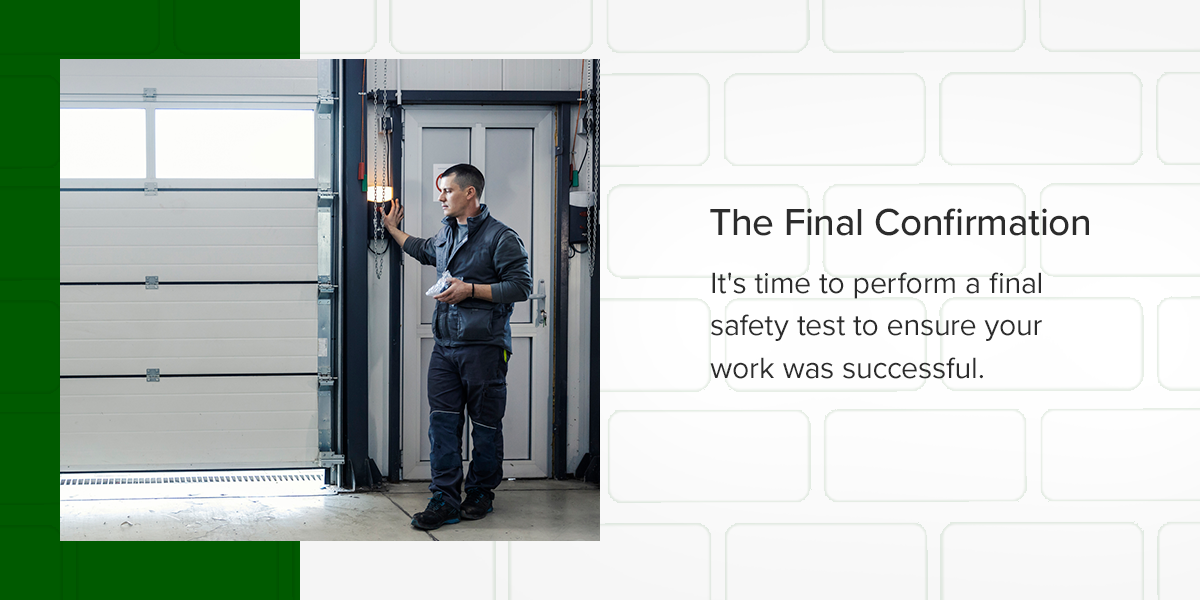
4. The Final Confirmation
After you have cleaned the lenses and confirmed the alignment, it’s time to perform a final safety test to ensure your work was successful. Take a cardboard box — or a similar soft object you don’t mind getting squished — and put it in the garage doorway, directly in the path of the sensors.
If the garage sensor is working properly, the door will start to close, detect the box and immediately go back to the open position. This confirms the safety system is functioning as intended. If the door crushes the box, then your garage door sensor is still malfunctioning, indicating a more serious problem that requires professional attention.
When to Call a Professional for a Repair
If you’ve tried the steps above and the door still won’t close correctly, the problem likely goes beyond a simple fix. For your safety and to avoid causing more damage, it’s time to call an expert, especially if you notice any of the following:
Damaged wires: You see frayed, chewed or cut wires leading to the sensors.
No power to the sensors: The LED lights on the sensors remain off.
Physical damage: The sensor itself or the mounting bracket is cracked, bent or appears damaged by water.
The problem persists: You’ve cleaned and aligned the sensors, but the issue continues.
Anything involving electricity or wiring should always be left to a professional for safety reasons and because, if done incorrectly, further damage can occur. Our technicians at Cornwell Door Service know how to repair garage door sensors quickly and effectively.
Cornwell Door Service Can Help Fix Your Garage Door Problems
While some sensor issues are a quick fix, a malfunctioning garage door compromises the safety and security of your home. Don’t let a persistent sensor problem leave you stuck. For safe, reliable and professional garage door repair in the south-central Pennsylvania area, trust the expert team at Cornwell Door Service. Contact us today to have an experienced technician solve your garage door problems quickly and effectively.